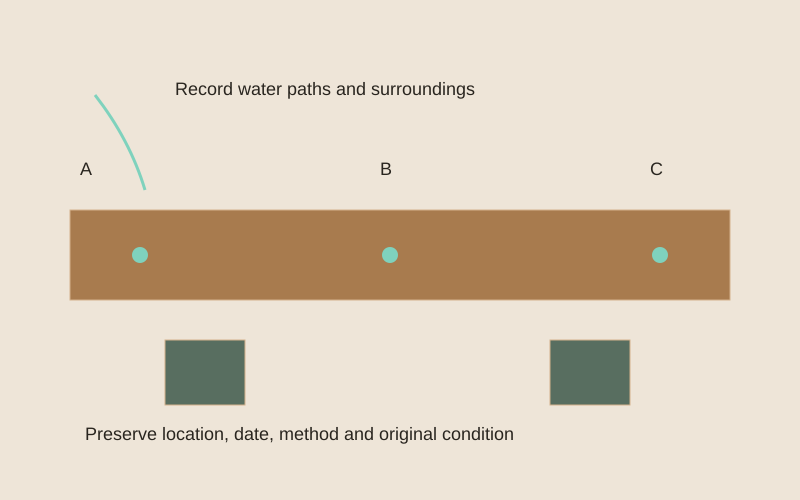
- Locate observations on the component before discussing causes or repairs.
- Record nearby supports, water paths and the timing of changes.
- Sample locations shown are conceptual, not a required sampling plan or instructions to access unsafe areas.
Define the reason for intervention
State whether the concern is appearance, usability, attachment, moisture behavior, or assessed material deterioration. Record what has been established and what remains uncertain. Replacement is a possible action, not a diagnosis. If structural function or connection safety is in question, obtain the appropriate assessment before comparing cosmetic repair with continued use.
Set the boundaries of each option
Describe monitoring, localized repair, individual-board replacement, and broader replacement only where they are plausible for the assessed condition. For each option, identify the area affected, access needed, components disturbed, and questions it leaves unresolved. Avoid presenting a low-cost option as equivalent when it does not address the same documented problem.
Check whether the cause persists
Review wetting, drainage, contact materials, installation detail, or other conditions identified during the investigation. Ask how each proposed action addresses the relevant findings. USDA's moisture and fastening guidance provide context for these interfaces. A new board placed into an unchanged problematic assembly should not be assumed to resolve the underlying issue merely because the surface is new.
Review replacement compatibility
Document the replacement profile, material, fastening system, finish expectations, and installation sequence. Compare mating features with retained samples where possible. Plan for the possibility that opening the area reveals a different scope of work. Establish who will decide how to proceed if concealed conditions differ from the assumptions used in the repair proposal.
Record acceptance and follow-up
Write the selected option, its rationale, the responsible acceptance, and any limits. Define completion evidence and any appropriate follow-up observations tied to the original concern. Keep invoices, product identities, and before-and-after photographs with the investigation record. Do not close the file with a broad statement that everything is fixed when an identified issue remains outside the completed work.
Practical checklist
- Separate assessed condition from the proposed action.
- Compare options against the same documented problem.
- Address persistent contributing conditions.
- Define concealed-condition decisions before work begins.
Worked example
Hypothetical example: a localized board replacement is proposed after damage is assessed, but the existing hidden clip cannot be reused with the new profile. The repair scope is revised to include an accepted attachment detail before the replacement is purchased.
Limits of this guide
No universal replace-or-retain threshold is supplied. The appropriate choice depends on the actual condition, function, interfaces, and assessment. Photos and a generic checklist cannot establish safe continued use or guarantee that a localized repair is sufficient.
Continue the decision
Create an evidence record that survives the repair
Document a loose connection before reaching for a driver
Describe a crack before deciding what it means
Start an investigation