The condition library
Describe the visible pattern before deciding what caused it.
Checks & splits
An opening along a face, edge or end.
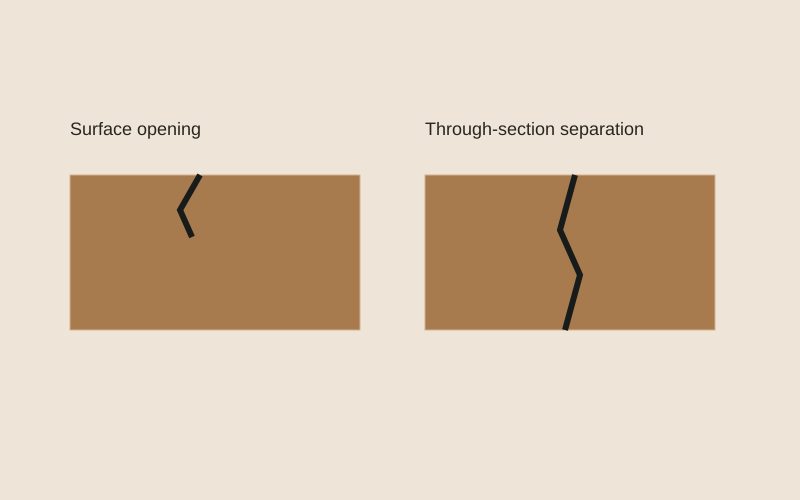
What to investigate
- Moisture-related movement is one line of investigation.
- Local restraint, damage and material history may also matter.
Questions that separate the possibilities
- Which accessible faces show the opening?
- Does it meet an end, support or fastener?
- Is there a documented change over time?
Do not pry, load-test or declare an opening harmless from a photograph.
Next stepRecord the whole member and its connections. A structural-function concern needs qualified on-site assessment.
A photograph needs its context
Similar openings.
Different evidence.
These published timber inspection photographs show why a surface opening and its surrounding condition must be recorded together. They are not Ipe case studies or a do-it-yourself inspection procedure.
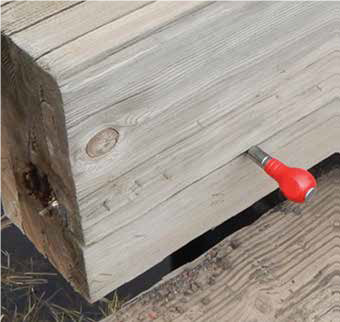
The source identifies decay-related discoloration near a split. That source finding cannot be transferred to a similar-looking board.
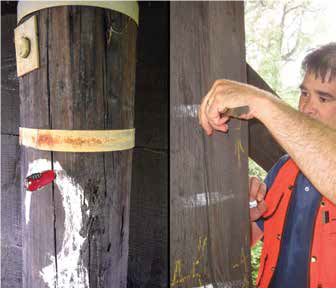
Component role, access and depth assessment are additional context. Do not reproduce this probing procedure without appropriate expertise.
Photographs: USDA Forest Service, reproduced on FHWA InfoTechnology — Probing, figures 1A and 1B. Species, site and capture date are not supplied on that page. No endorsement is implied.