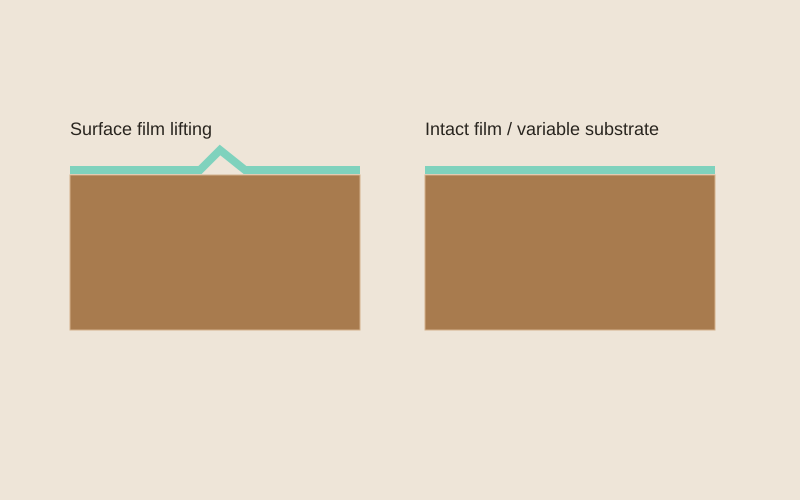
- Separate the condition of the finish layer from the condition of the wood below it.
- Record coating identity, preparation and exposure before choosing a trial.
- Diagrammatic layers do not establish the actual cause or an appropriate chemical treatment.
Name the visible symptom
Describe the condition as peeling, flaking, uneven color, persistent tackiness, dull patches, or another observable feature. Map its distribution and photograph transitions to apparently unaffected areas. Record whether the complaint concerns color, adhesion, texture, or maintenance expectations. Avoid the broad phrase finish failure when the evidence supports only a particular appearance change.
Recover the application history
Collect the exact finish product, batch if available, application dates, preparation method, previous coatings, and recorded conditions. Ask about cleaning and subsequent maintenance. Keep unknown details explicit. A recollection that the wood was dry is not the same record as documented measurement, and a generic oil description may not identify the applied product or its instructions.
Compare exposure and details
Map sun, shade, splash, cover, horizontal surfaces, and nearby objects alongside the symptom. USDA's finishing chapter treats appearance, protection, cleanability, wood properties, and expected service as selection considerations. Use those categories to frame questions, while resisting a diagnosis based on one photograph or a claim that one coating class performs identically in every exposure.
Plan a representative trial
Preserve the original condition before preparing a small approved trial area. Follow the finish system's instructions and document each step, including the waiting periods and conditions actually achieved. Keep a neighboring reference area and identify the trial boundary. Do not strip a large area first and then try to reconstruct why the original coating behaved differently.
Define what success means
Agree whether the trial is evaluating appearance, cleaning response, preparation practicality, or another specific question. Review it after the relevant product-defined period and record unresolved differences. Separate approval of the trial appearance from a promise of long-term durability. If moisture or substrate condition remains uncertain, resolve that issue before treating recoating as the complete repair.
Practical checklist
- Name the observed symptom precisely.
- Recover exact product and preparation records.
- Map exposure alongside the affected areas.
- Use a documented trial with a defined evaluation goal.
Worked example
Hypothetical example: a porch has shiny patches near a sheltered wall and dull wear near the entrance. The record treats them as separate distributions and tests a reviewed maintenance approach instead of assuming the entire coating needs the same treatment.
Limits of this guide
A photo cannot establish adhesion mechanisms, cure status, or concealed substrate condition. This guide does not prescribe a finish or removal chemistry, and it offers no fixed maintenance interval. Product instructions and project conditions control the evaluation.
Continue the decision
Investigate surface staining without assuming decay or corrosion
Build a moisture investigation around locations and repeat readings
Create an evidence record that survives the repair
Start an investigation